Six thousand hours of labour, hand-stitched Connolly leather, and the pursuit of a perfect mechanical heartbeat. The journey of returning a pre-war legend to the open road.
The car arrived on a flatbed at the workshop in late February of last year. It had been stored, badly, in a barn outside Vicenza since 1971 — five decades of dust, mouse-damaged upholstery, and a chassis number that, when finally cross-referenced against the Alfa Romeo Storico archive, produced a small intake of breath from the senior cataloguer.
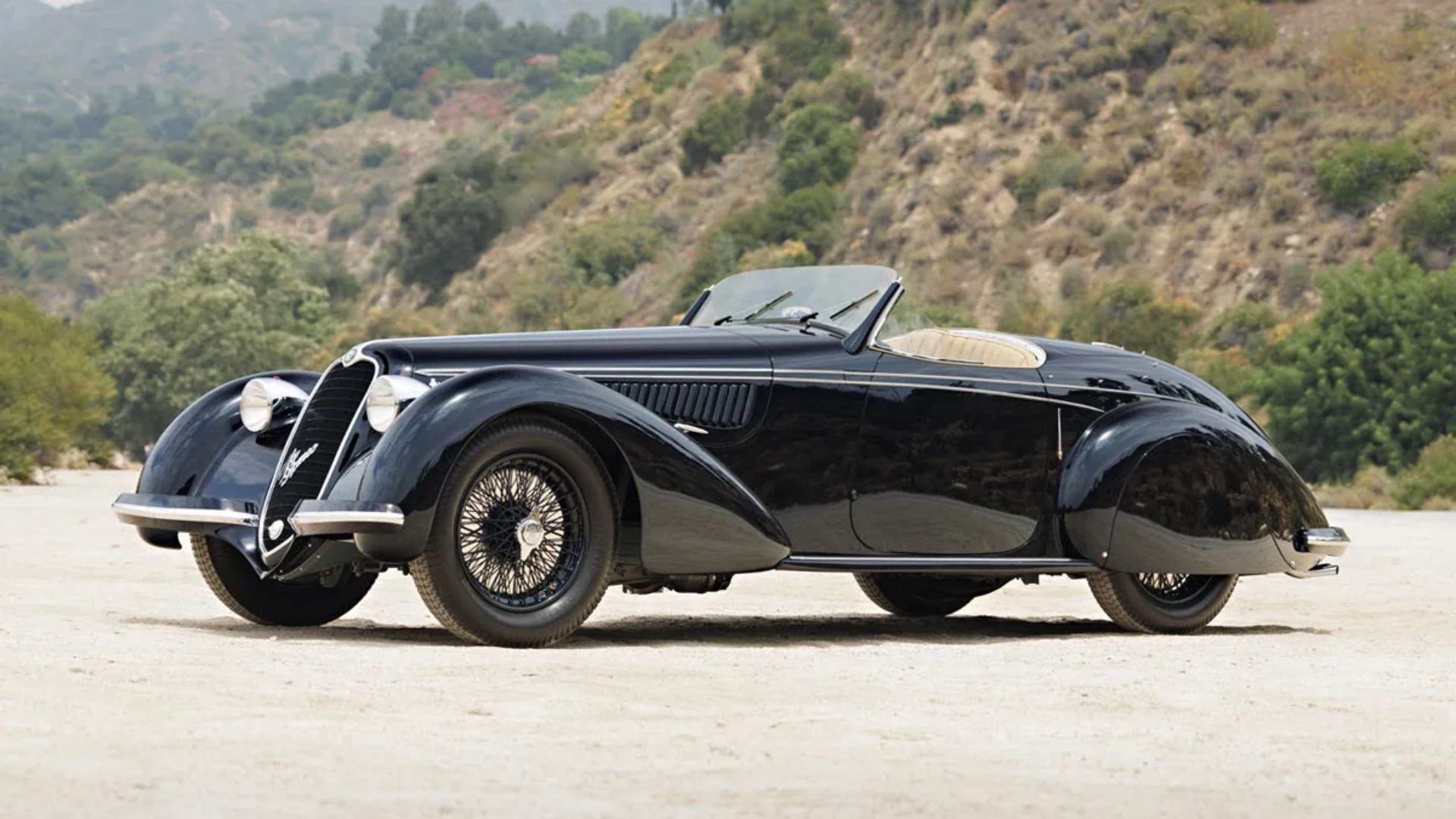
This was a 1938 8C 2900B. One of thirty-two ever built.
The before
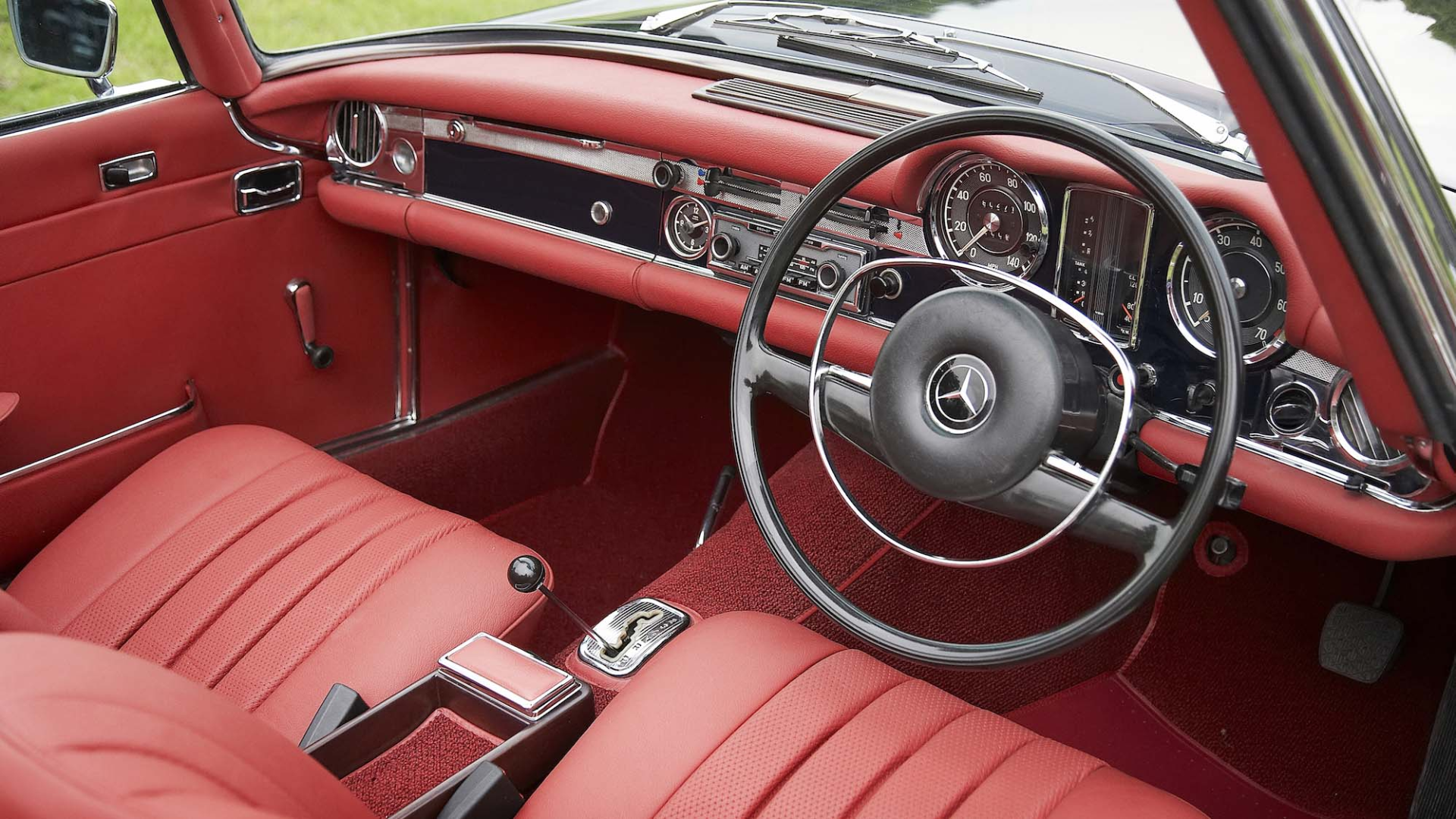
A pre-war Alfa Romeo Tipo 8C 2900B is not a car you restore casually. The aluminium body, originally hand-formed by Touring of Milan to the Superleggera method, had suffered the indignities a forgotten barn imposes — corrosion at every panel seam, the famous lightweight tubular substructure half-eaten by rust, the leather of the interior reduced to brittle, blackened ribbons.
The first decision in any serious restoration is not technical. It is philosophical. Do you erase the patina of seventy years? Or do you preserve it?
The owner — who has asked, as is customary in this register of collecting, to remain anonymous — was unequivocal. Original, mechanically perfect, but honestly aged. The car would be returned to running condition with absolute mechanical fidelity, but it would not be made to look new. It would look like what it was: a survivor.
The engine
The 2.9-litre straight-eight, twin-supercharged, was the technical marvel of its day. Vittorio Jano's design — two four-cylinder blocks joined at a central drive gear, twin Roots blowers feeding through a pair of Weber 36DR4 carburettors — produced 180 horsepower in road tune, 220 in racing trim. By comparison, the contemporary Bugatti Type 57 produced 135. The Alfa was, simply, the fastest road car in the world.
Disassembly took eleven weeks. The crankshaft was sent to a specialist in Modena who had himself trained under one of Jano's former apprentices. The pistons, miraculously, proved to be matching, period-correct, and within tolerance. The blowers needed new rotors machined from billet — a six-month wait. The Webers were rebuilt by a man in Bologna whose workshop has changed neither premises nor methods since 1947.
The body
Here the philosophy showed itself in earnest. Where a less serious restoration might have stripped the aluminium back to bare metal and re-sprayed in modern two-pack, we used a hand-rubbed nitrocellulose, applied in seven coats, polished between each. The colour — Grigio Conchiglia, a soft pearl grey specific to the late thirties — was matched from a fragment of original paint preserved beneath the bonnet hinge.
Small dents from decades of storage were carefully retained. A scrape along the rear nearside wing, plainly from a long-ago encounter with a stone wall, remained visible. The owner was firm: the car must wear its life.
The first start
Eighteen months after the flatbed delivery, on a damp Wednesday morning, the engine was primed, the ignition switched, and the starter engaged. It caught on the second crank. It idled — uneven for the first thirty seconds, then settling — at exactly the rhythm Jano had specified in his 1938 service notes.
The workshop went silent. Even the men who had built it stood with their hands by their sides, listening.
What was learned
Six thousand hours. Roughly the work of three men over a year and a half. The cost will not be discussed here, but it is enough to say that the figure exceeds the purchase price of most family homes.
But this is not a calculation in pounds. It is a calculation in continuity — the carrying forward, against time's persistent erosion, of a single object that represents what the human hand and human mind were capable of in a particular summer eighty-six years ago.
The car now lives, again. That is the only metric that matters.