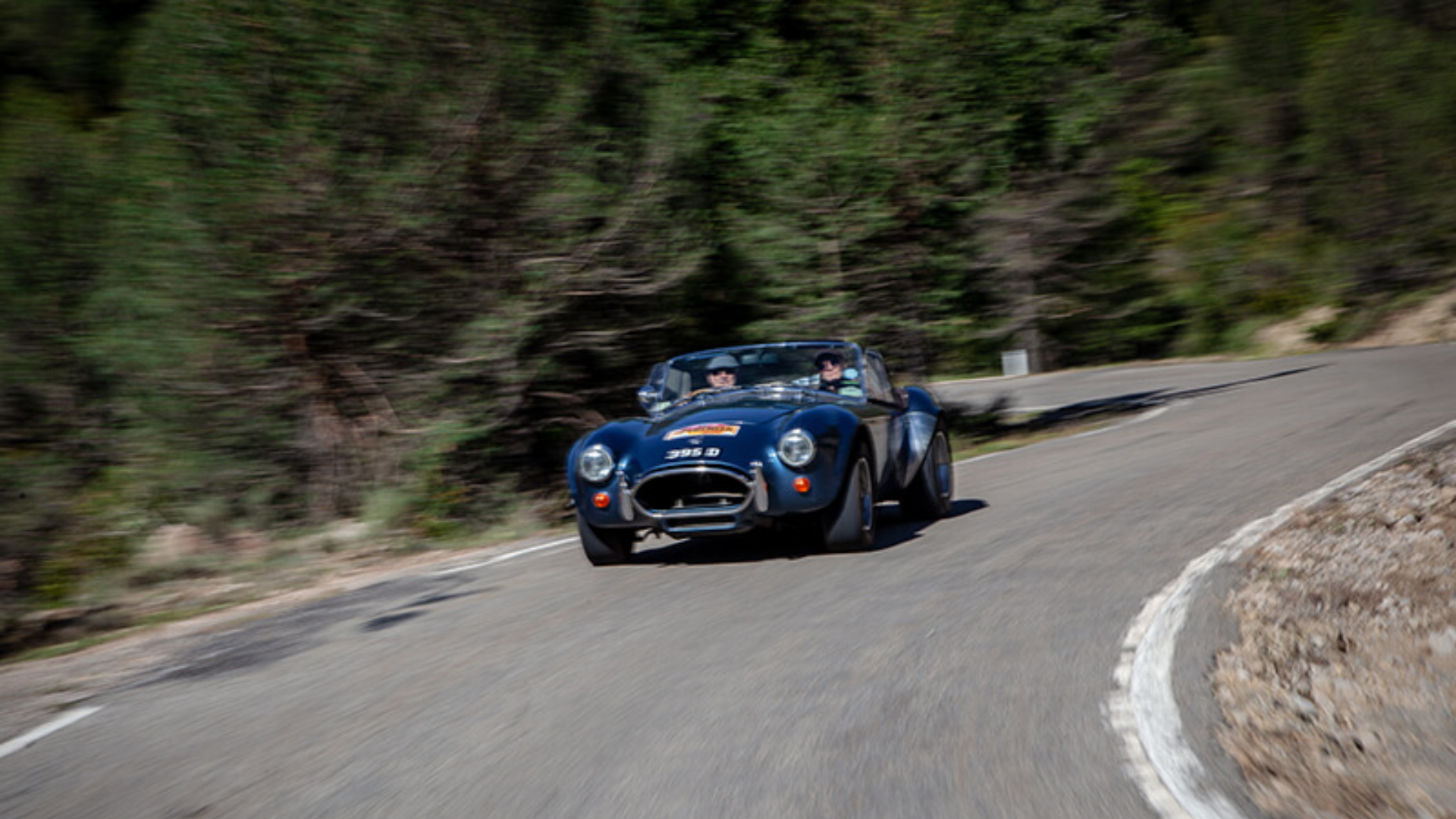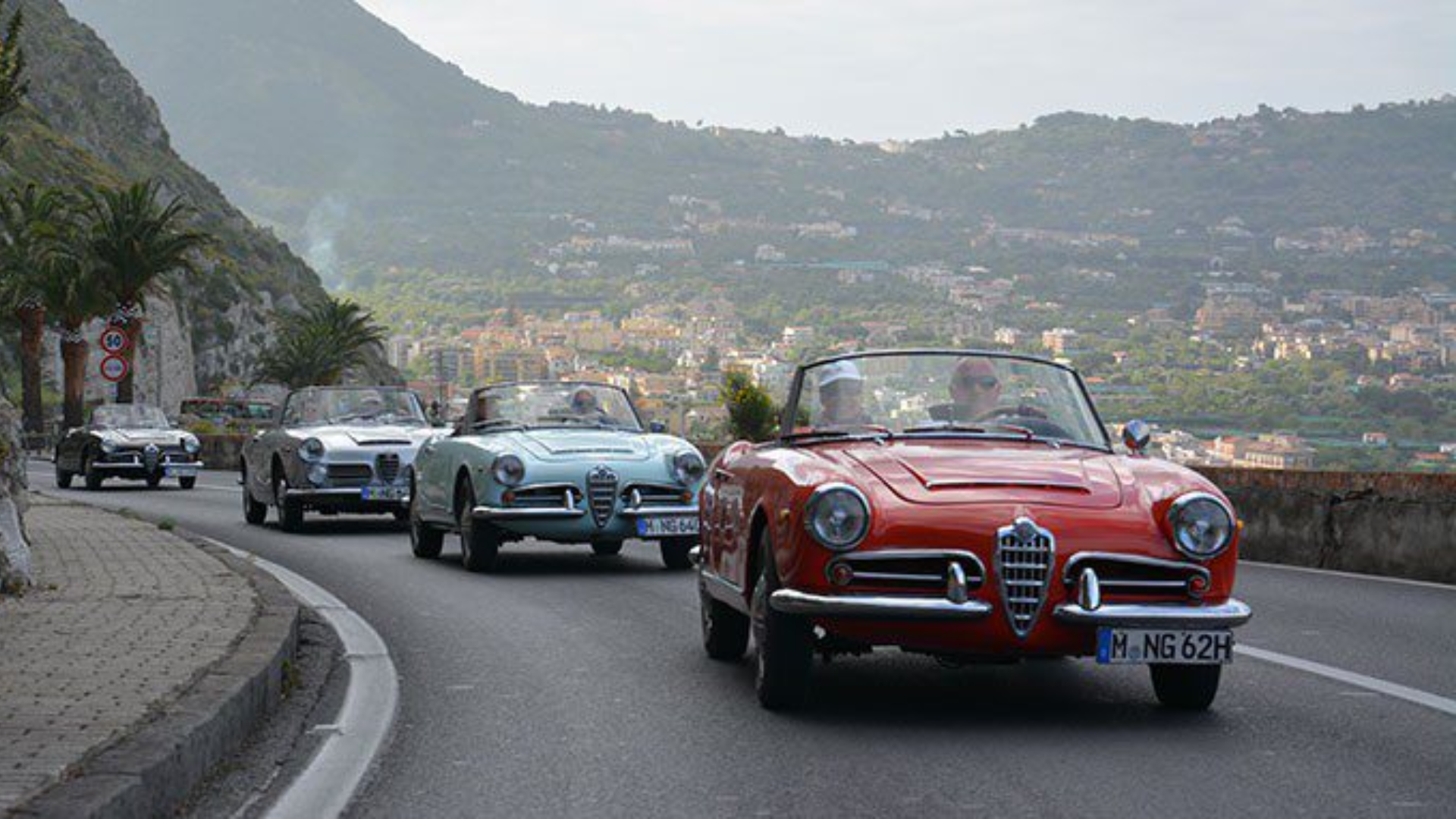
Navigating the hairpins of Positano in a 1958 Ferrari 250 GT California Spyder is more than a drive — it's a symphony of mechanics and landscape.
The road from Sorrento to Positano demands more than skill. It demands a vehicle that belongs there — a machine whose proportions were drawn by men who had themselves driven these very cliffs, who understood that an automobile, on a road like this, is less a tool of transport than a partner in dialogue.
First light, second gear
We collected the California Spyder from a private garage near Vico Equense just after five in the morning. The air still carried the night's coolness — that brief Mediterranean window when the cypress trees hold their breath and the sea, four hundred metres below, lies black and still as obsidian.
A 1958 California Spyder does not start. It awakens — slowly, deliberately, the way a tenor clears his throat before a Verdi aria.
The Colombo V12 idles at six hundred and twenty revolutions per minute. At this register, you can hear each cylinder fire individually, and the sound — neither quite mechanical nor quite musical — fills the stone courtyard with a low, layered rumble that the village's morning birds answer in return.
The road remembers
There is a particular section of the SS163 that runs between Praiano and Conca dei Marini — perhaps four kilometres in length — where the carriageway tightens to a single lane, the cliff falls away to your left, and the limestone rises sheer to your right. Modern cars hesitate here. They feel too wide, too computerised, too anxious about their own dimensions.
The Ferrari does not hesitate. Its narrow body, period-correct at one metre fifty-eight from mirror to mirror, was conceived for exactly this geometry. The steering — unassisted, alive with the road's every contour — speaks directly to the palms. You don't drive this car along the Amalfi. You converse with it.
A breakfast at Conca dei Marini
By half past seven we had crested the climb above the Fjord of Furore and pulled into a small terrace café whose terrazzo floor and bougainvillea balustrade looked as though they had been waiting, since 1958, for a Rosso Corsa Spyder to park beside them. The proprietor — a man perhaps eighty years old, in a linen shirt and canvas espadrilles — emerged with a macchiato and a single sentence.
"Ah," he said, looking past us at the car. "Finalmente."
Finally. As though the morning, the coast, and the machine had all been arranged for the sole purpose of this brief encounter.
What such a drive teaches you
We returned to Vico Equense by midday, having covered eighty-seven kilometres in five and a half hours. By any rational measure, this is an absurd pace. But this is not a road for measure. It is a road for attention — and in that, a vintage California Spyder is unmatched.
You arrive aware of the morning, of the engine, of the temperature of the steering rim, of the precise weight required at the brake pedal to settle the car into a downhill hairpin. You arrive present, in a way the modern world rarely allows.
And that, perhaps, is the unspoken thesis of every great vintage drive: that the destination has never been the point.